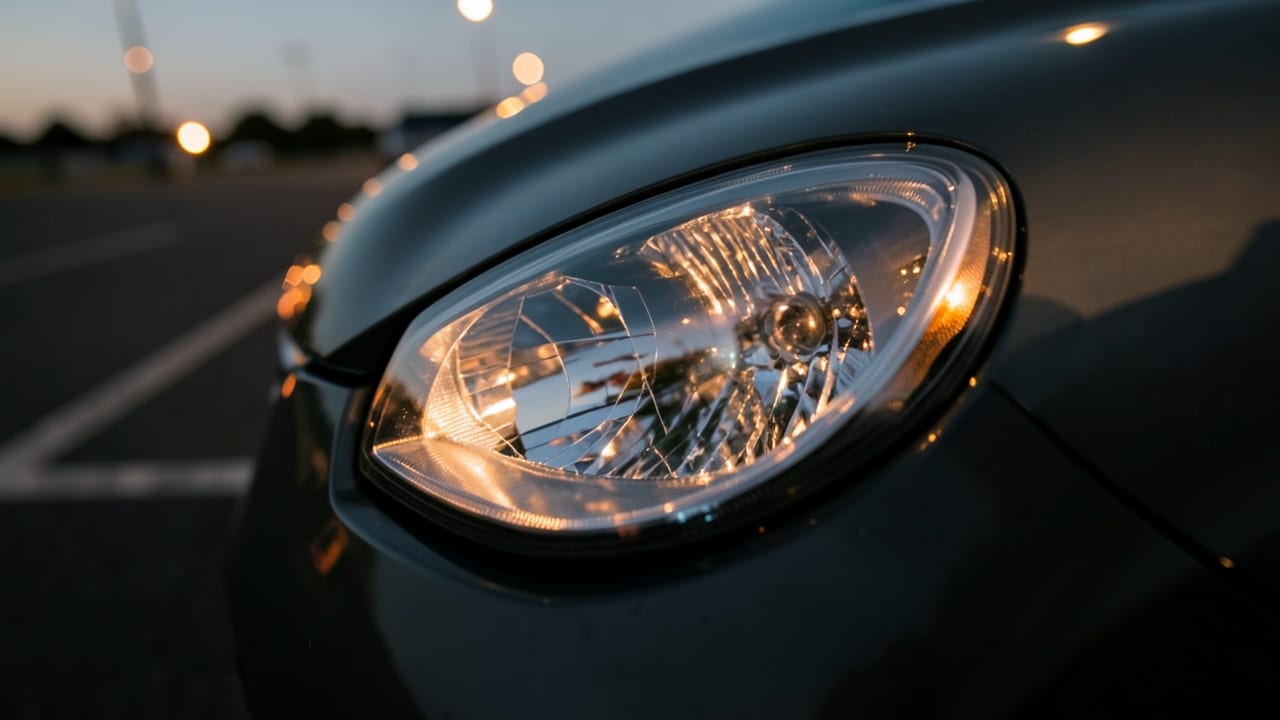
Headlight Restoration & Coating
Headlight restoration and UV-protective coating in Brighton, CO — restores clarity and nighttime visibility without replacing the assembly.
In Brighton, CO, cloudy headlights reduce nighttime visibility and safety. Our headlight restoration and ceramic coating service removes oxidation, restores clarity, and applies a durable UV-protective ceramic finish to prevent future haze—often at a fraction of replacement costs.
Why Headlights Fade in Brighton’s Climate
Brighton’s high-altitude sun and temperature swings accelerate headlight degradation. Modern polycarbonate lenses rely on a thin factory UV coating that breaks down over time, leaving the plastic exposed to oxidation and yellowing.
We also handle Iron Particle Decontamination and Water Spot Removal for Brighton vehicles.
Unlike glass, polycarbonate can’t be cleaned back to clarity—it requires wet-sanding to remove the damaged layer. Without a new protective coating, the cycle repeats within months.
Signs Your Headlights Need Restoration
- Visible yellowing, cloudiness, or hazing on the lens surface
- Reduced nighttime visibility or dimmer low-beam output
- Frequent wiping or cleaning has no lasting effect on clarity
- Headlight lenses appear dull or frosted, even when clean
Restoration vs. Replacement: Cost and Value
Replacing headlight assemblies on modern vehicles can cost hundreds per side, especially for models with adaptive lighting or LED arrays. Restoration preserves your existing housings while delivering near-original light output.
Our ceramic coating bonds chemically to the lens, resisting UV damage far longer than DIY sprays or waxes. This extends the life of your restoration and maintains optimal light transmission.
| Option | Cost (Typical) | Durability | Light Output |
|---|---|---|---|
| DIY Restoration Kit | $20–$50 | 3–6 months | Temporary improvement |
| Professional Restoration + Wax Sealant | $100–$150 | 6–12 months | Moderate improvement |
| Professional Restoration + Ceramic Coating | $150–$250 | 2–4 years | Near-original clarity |
| OEM Replacement Assemblies | $400–$1,200+ | Lifetime of assembly | Original output |
The Science Behind the Clarity
Polycarbonate lenses scatter light when oxidized, reducing beam distance by up to 80%. Our process removes the degraded surface layer, restoring the lens’s optical properties and ensuring light passes through unimpeded.
How Headlight Restoration & Coating Works
Our process combines wet-sanding, polishing, and ceramic coating to restore clarity and durability.
- 1Surface Preparation
We mask off surrounding areas and clean the lens to remove contaminants. This ensures no debris interferes with the sanding process.
- 2Wet-Sanding
Progressive grits (from coarse to fine) are used to sand away the oxidized layer of polycarbonate, leveling the surface without damaging the lens.
- 3Machine Polishing
A dual-action polisher and fine compounds remove sanding marks, restoring the lens to optical clarity and a mirror-like finish.
- 4Ceramic Coating Application
A UV-protective ceramic coating is applied and cured, chemically bonding to the lens to resist future oxidation and maintain transparency.
Frequently Asked Questions
How long does the ceramic coating last in Brighton’s climate?
Our ceramic coating typically lasts 2–4 years, even with Brighton’s intense sun exposure. It outperforms wax-based sealants, which often fail within months.
Will this fix moisture inside my headlight housing?
No—restoration and coating address external oxidation and haze. Moisture inside the housing requires sealing or replacing the assembly, which is a separate issue.
Can you restore headlights on any vehicle?
Yes, we restore polycarbonate lenses on all makes and models, including older vehicles and newer models with complex housing designs. Replacement is only recommended if the lens is cracked or the housing is damaged.
Do I need to replace my bulbs after restoration?
Not necessarily. If your bulbs are functioning, restoration will improve light output by removing the haze. However, we can inspect bulb condition during service and recommend replacement if needed.
See Fort Lupton, CO for more, or explore the rest of our Brighton lineup step by step for our complete lineup.
Ready to get started?
Talk to a local ceramic coating pro in Brighton — get a written quote.
Other Ceramic Coating Services in Brighton
Iron Particle Decontamination in Brighton, CO
Removal of embedded iron particles from automotive paint using chemical solutions.
Learn More
Water Spot Removal in Brighton, CO
Professional removal of water spots from ceramic-coated or painted surfaces to restore appearance.
Learn More
Pre-Winter Paint Sealant Application in Brighton, CO
Professional application of ceramic-based sealant to protect vehicle paint before winter.
Learn More
Spring Paint Rejuvenation in Brighton, CO
Ceramic coating and paint correction to restore and protect vehicle surfaces.
Learn More
Annual Ceramic Maintenance Wash in Brighton, CO
Professional cleaning and reapplication of ceramic coatings to preserve paint protection.
Learn More
Mid-Summer UV Protection Top-Up in Brighton, CO
Ceramic coating reapplication to restore UV protection and gloss on vehicle paint.
Learn MoreCommon Questions About Ceramic Coating in Brighton
Everything you need to know about ceramic coating services in Brighton
How much does Headlight Restoration & Coating typically cost in Brighton, CO?
Can ceramic coating prevent rock chips on mountain roads around Brighton, CO?
How long does a ceramic coating actually last in real-world use?
What is the difference between graphene and SiO2 ceramic coatings?
Does a ceramic coating need to be topped up over time?
Can a ceramic coating be applied over existing swirl marks or light scratches?
Need Ceramic Coating in Brighton?
Get a written quote from our Brighton crew.
⏰ We answer your call • Serving all of Brighton and surrounding areas